fishtank.camUNS 30A Plakat betta

Short-fin betta

A planted cube for one plakat.

Planned and explained.

Scroll to see the plan

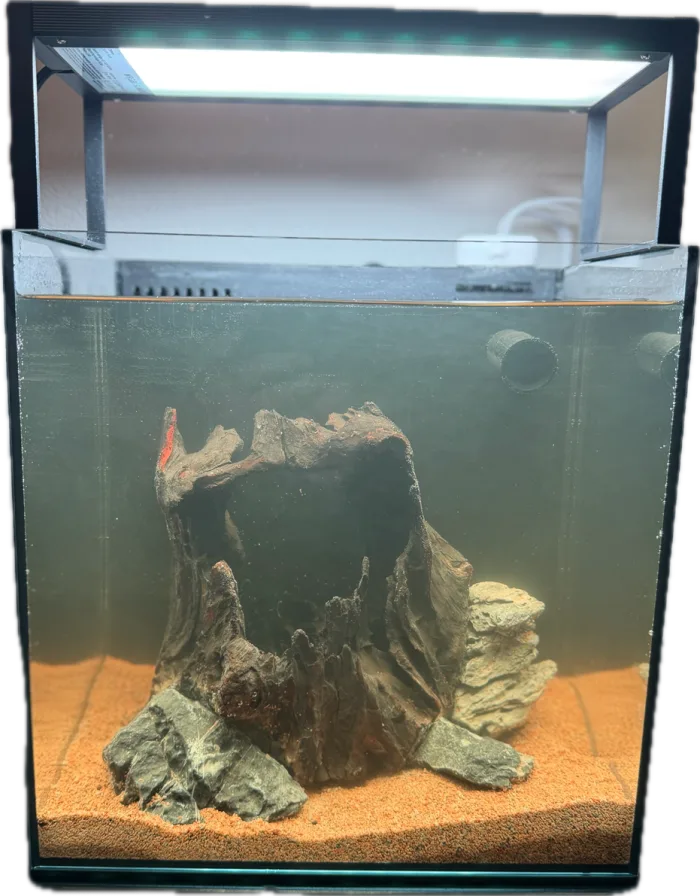
Here it is today.

The short-fin betta tank today: a hollow stump of wood and stones on orange sand

Today

Two cubes, side by side.

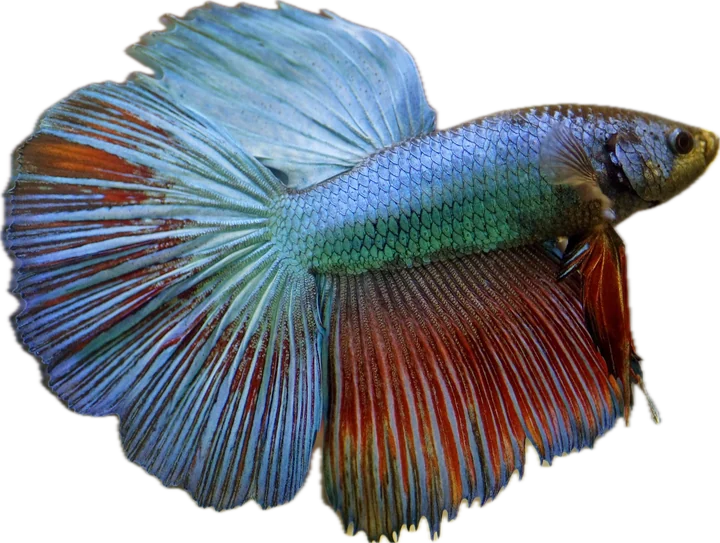
A plakat on the left, a halfmoon on the right.

Light looks

Watch only

The dial

    Admin

    Live controls

    Where the waste goes

    Nothing is wasted for long.

    Where the waste goes

    The betta makes waste.

    Here is where it goes.

    1. The betta breathes and leaves waste. It sinks to the bottom.
    2. Bacteria break it down. Waste becomes ammonia, then nitrite, then nitrate.
    3. Plants feed on the nitrate. It is their food, so they grow.
    4. Leftovers feed algae. What the plants don't use, algae will.
    5. Snails and shrimp eat it up. They graze the algae off rock and glass.

    Low tech

    Slow plants, no added CO2.

    What low tech means

    Gentle light. No added CO2. Slow plants.

    1. No added CO2

      The plants live on the CO2 already in the water, so they grow slowly.

    2. Gentle light

      Bright light without CO2 feeds algae. Gentle light keeps it back.

    3. Months, not weeks

      Months to grow in; a trim about once a month.

    CO2 added0ppm
    Trims~1a month

    The opposite is the showcase tank, a high-tech tank.

    Grow

    The light and the plants.

    The light

    Plants run on light.

    A Chihiros WRGB II Slim 30 on legs, on the same day as its twin next door. It rises slowly, stays bright through the afternoon and evening, then fades to a faint blue moonlight.

    Full light a day
    7½ h
    Brightest setting
    40%
    Blue moonlight
    2%
    • Sun–ThuDim from 11 amFull 2:30 pm to 10 pm
    • Fri–SatDim from 12 pmFull 4:30 pm to midnight

    A warm white from the red, green and blue channels.

    The scape

    A planted tank is a small landscape.

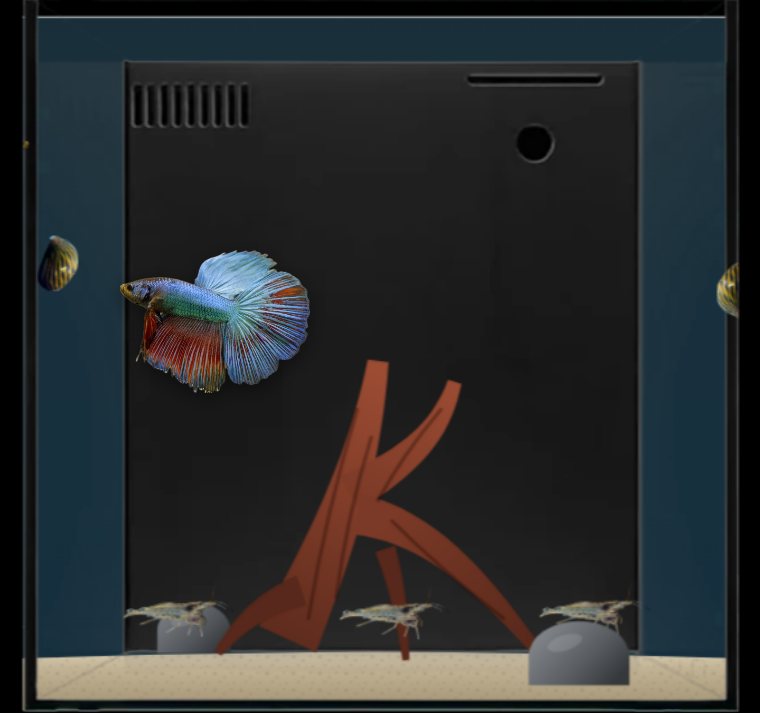
    Here: one rough arch of wood, two stones, open sand and eleven slow plants. The right half stays open water.

    The hardscape

    • Arch woodOne rough piece with a hole through it. A cave to swim through.
    • Two stonesAt the foot of the wood, holding the ferns.
    • UNS ControsandFine, pale sand for the whole floor. No soil.

    Back

    • Vallisneria spiralisBack left. Tall, thin ribbons that sway to the surface.

    On the wood and stones

    • Java fern TridentTied inside the arch. Narrow, forked leaves.
    • Weeping moss, two tuftsOn top of the arch and around the hole. Hangs down like a willow.
    • Mini Bolbitis, twoOn the stones. A soft, frilly fern.
    • Bucephalandra Mini Dark Needle, twoOn the stones. Dark, narrow leaves.
    • Bucephalandra Brownie BlueIn a crack of the wood. Bronze leaves with a blue sheen.
    • Bucephalandra Arrogant BlueOn the wood. Deep green, blue-purple in the light.
    • Anubias nana BonsaiLow on the wood, left. Small, round, dark leaves.
    • Anubias nana PetiteAt the foot of the left stone. Tiny, tough leaves.

    Front

    • Cryptocoryne willisiiIn the sand, front left. A low rosette that spreads by runners.

    Floating

    • Salvinia cucullataTwo patches, held in a ring. Shade, and cover near the surface.

    Water

    Keeping it clean and safe.

    Flow

    Fish live in their own waste, so the water keeps moving to clear it away.

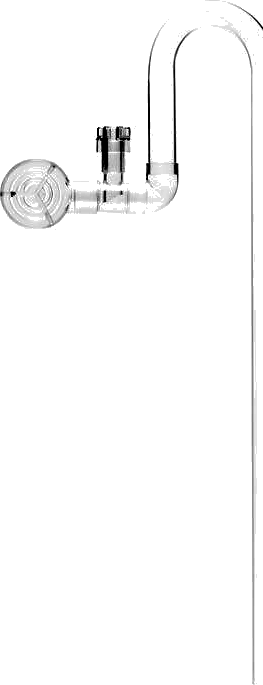
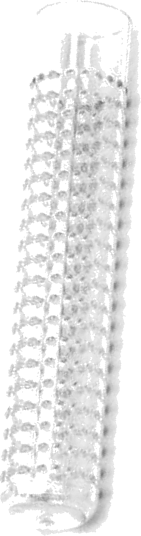
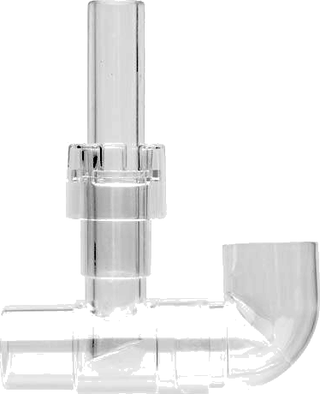
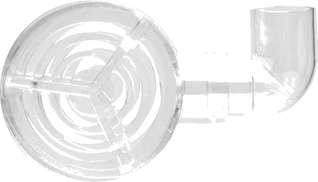
    It leaves through slots in the back wall, passes the sponge, the media and the heater behind it, and comes back gently through a clear outlet.

    Inside the filter

    The real cleaning is done by bacteria.

    They live on the sponge and blocks in the media tower and turn toxic waste into nitrate, which plants use as food.

    Cycling

    A new tank needs time before fish.

    Sand brings no waste of its own, so the bacteria are fed a little pure ammonia instead. When they clear it in a day, the tank is ready.

    1. Now wood, stones and sand in. No water yet.
    2. Water in dechlorinated tap water, heater at 78 °F, pump on low.
    3. Bacteria a starter bottle, then ammonia to 2 ppm.
    4. Plants in while it cycles. They help.
    5. Test every 3 days ammonia and nitrite, with pH, and nitrate once a week. Top the ammonia back up as it falls.
    6. Done when 2 ppm reads 0 ammonia and 0 nitrite a day later, two days running.
    7. Then a big water change, and the plakat goes in.

    When the betta comes in

    Once the water tests clean.

    The plan

    Stocking takes weeks, not days.

    Each step waits for clean water tests.

    1. Tank on its shelf, done.
    2. Scape wood, stones and sand, done.
    3. Cycle water in, then until the tests read 0.
    4. Plants on the wood, during the cycle.
    5. The plakat once the tests stay clean.

    Fish

    But where is the betta?

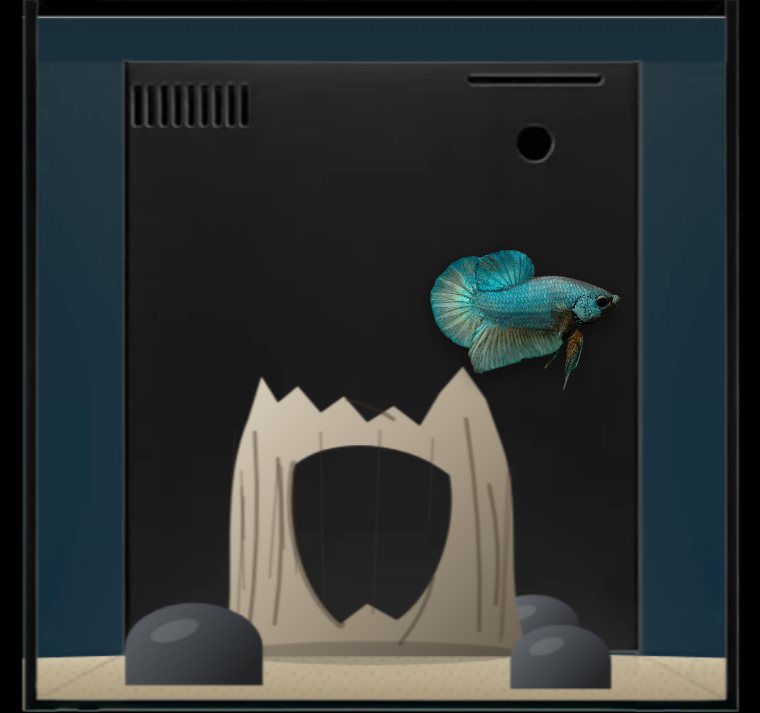
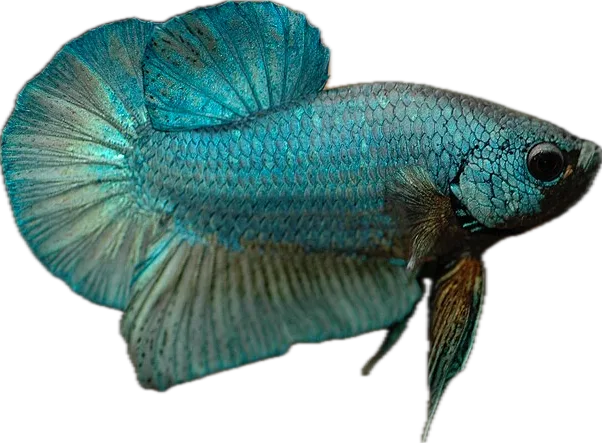
    A plakat: short fins, quick and bold, closest to the wild fish. He moves in alone, once the water tests clean.

    Alone

    Why no tank mates?

    One betta, one tank.

    One per tankbest kept aloneMales fightfins look like rivalsSmall shrimplook like food
    • Territorial

      Bettas are territorial. Two males fight; that is how the Siamese fighting fish got its name. So it is one betta per tank.

    • Not a community fish

      Other fish with long, flowing fins look like rivals to a male.

    • Room for one

      Peaceful tank mates need a bigger tank, at least 10 to 20 gallons. This one holds about 7, so it is all his.

    • No shrimp either

      In the wild, bettas likely eat small invertebrates, so small shrimp would look like food.

    Feeding

    Less food keeps the water clean.

    Two or three pellets, once or twice a day, and one day off a week.

    Care

    The rest is a routine.

    Livestock

    One plakat betta.

    Who lives here

    Who lives here.

    Scroll to swim through the tank with each one.

    1. 01 · The fish

      Plakat betta

      Betta splendens

      One male, on his own.

    2. As a fish

      A labyrinth fish: besides its gills, it can breathe air at the surface. From still, sluggish water in central Thailand: rice paddies, swamps and roadside ditches. Up to about 7 cm.

    3. Behaviour

      A bubble nester: the male builds a nest of bubbles at the surface and guards it alone. Males fight, so it is one betta per tank.

    4. Its job here

      The only fish, and the star. Short fins, quick and curious: the closest to the wild fish, and safe around the rough arch wood.

    5. Facts

      Size
      About 7 cm (2.8 in)
      From
      Central Thailand
      Water
      72 to 86 °F, pH 6.0 to 8.0
      In the wild
      Likely preys on small invertebrates
      Here
      Pellets, plus frozen daphnia or brine shrimp

      Seriously Fish, Betta splendens

    Setup

    Tank setup.

    The gear

    The gear behind it.

    A rimless glass cube with the filter, pump and heater hidden behind a black back wall. Above it, a thin light on legs; on top, a glass lid.

    About

    Why this tank.

    About the tank

    I'm Brendan, ChumtheWaters online.

    This is the left-hand cube of a pair: a small planted tank for one plakat betta.

    Its rough arch of wood was too sharp for long fins, so this cube gets the short-finned betta, and the halfmoon gets the smooth red wood next door. Eleven slow plants, no CO2.

    Nothing is rushed. The water cycles first, and the plakat comes home once the tests stay clean.

    Special thanks to my local stores, Aquarium & Reptile Depot and Exotic Aquarium.

    The tanks

    Five tanks, one house.

    Gear list by tank

    The parts behind each tank.

    The full gear list and credits

    Reference

    The full gear list and credits.

    Credits